
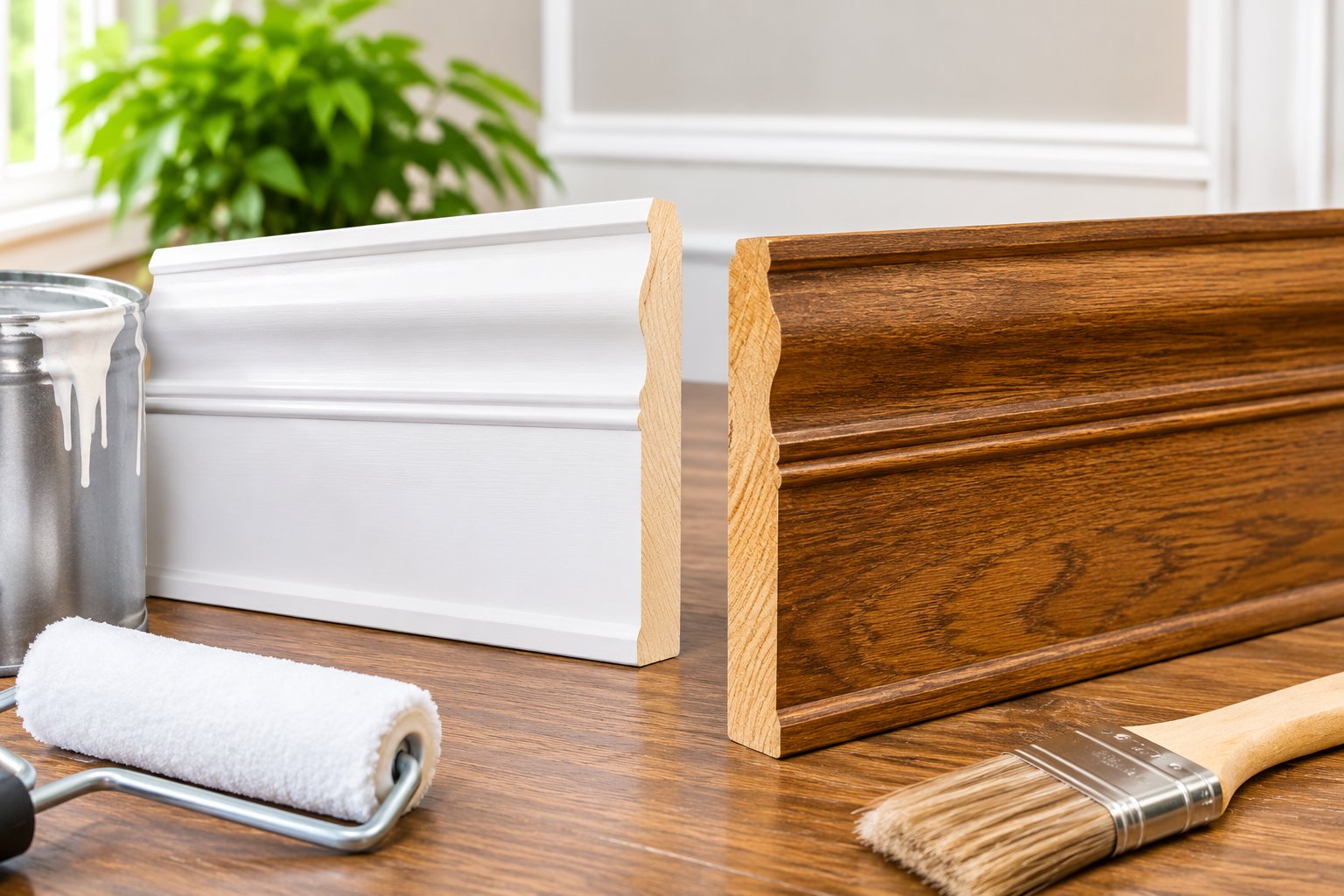
The distinction in paint grade vs stain grade trim concerns the material and construction selected for the intended finish. Painted work is covered by an opaque coating, while a stained or clear-finished surface leaves more of the wood’s visual character apparent.
That does not make paint grade a universal synonym for poor quality or stain grade a guarantee of one uniform appearance. The actual specification should identify the product, material, construction, profile, finish intent, and approved sample.
For a Kentucky or regional building project, decide the intended finish before ordering the millwork. A later switch from paint to stain can reveal assumptions that were acceptable for one finish but never approved for the other.
Define What the Labels Mean in the Quotation
Suppliers and product lines may use paint-grade and stain-grade descriptions differently. Ask what the quoted item actually includes.
The description should identify the relevant material and construction rather than relying on the label alone. Solid wood, jointed components, engineered products, and other options have different characteristics.
Ask which visible features are acceptable under the proposed specification. Do not assume one person’s understanding of “paint grade” matches the manufacturer’s.
A clear quotation lets the purchaser, installer, and finisher work from the same expectations. It also gives the team a basis for reviewing a delivery that appears different from the sample considered during design.
Separate Finish Intent From Wood Species
Species is important, but it does not answer every finish question. Selection, construction, grain, surface preparation, and the desired appearance also matter.
Do not assume that naming a familiar wood automatically establishes the grade or the finished result. Ask for samples representative of what will be supplied.
Likewise, a material commonly used for painted work should not be selected for a visible-grain finish merely because someone hopes stain will conceal its differences.
The intended finish should guide the material conversation. Start with the appearance and use you need, then ask the supplier to identify suitable documented options. That is more reliable than choosing a species first and leaving the finish requirements undefined.
The Architectural Woodwork Institute’s wood paneling material requirements illustrate how opaque and transparent finishes can carry different material requirements in specified architectural work. They are a useful comparison reference, not a claim that every residential trim order is supplied to that standard.
Understand Why Visible Grain Changes the Review
A stained or clear finish makes natural features and construction details part of the appearance. Color variation, grain direction, and joints may be more noticeable than under an opaque coating.
That variation is not automatically a defect, but it should fit the approved expectation.
The J. Gibson McIlvain discussion of paint- and stain-grade milling illustrates how finish intent can influence material and production decisions. Use that principle to ask about the actual trim being quoted.
Do not approve a stain color on one small piece and assume every delivered length will look identical. Review representative material and understand the range that belongs to the product.
Compare the Same Profile Where Possible
When comparing finishes, use samples that allow a fair assessment. A complex stained crown and a simple painted baseboard differ in more than finish.
Ask to see the same or comparable profile in the candidate materials. Review the face, edges, shadow lines, and how the detail reads at its intended position.
A profile can look different when the finish changes. Paint may emphasize a clean outline, while a visible-grain finish adds variation across the surface.
Record the exact profile and dimensions. A photograph or a general style name is not enough to order a matching component later. The finish decision should remain connected to a product that can be identified.
Review Joints and Long Runs
Long trim runs may involve joints or changes in material length. Ask how those details will be handled for the chosen finish.
A joint acceptable in a painted assembly may require different appearance planning when the wood remains visible. The appropriate approach depends on the product and installation.
Do not assume the millwork supplier, installer, and painter have already coordinated the detail. Clarify who is responsible for the decision.
Also consider corners, returns, and transitions. A sample length does not show every condition in a complete room. Reviewing representative details before ordering makes the expectations easier to carry through construction.
Coordinate Adjacent Doors and Other Woodwork
Trim does not appear alone. Doors, stair parts, mantels, cabinets, and built-ins can affect how the finish reads across a space.
Decide which elements are intended to match and which are deliberately different. “Matching wood” can mean the same species, a coordinated color, a compatible profile, or another design intention.
Ask whether the proposed products can reasonably meet that intention. Different substrates and constructions may not produce identical appearance under the same finish.
A sample board showing the relevant adjacent materials is often more useful than separate selections made weeks apart. Keep the final combination identified so later substitutions can be reviewed against the same design goal.
Cox Interior’s interior door information is a useful companion when checking that the proposed trim finish works with adjacent doors and the wider woodwork package.
Include the Finisher in the Specification
The person responsible for finishing should understand what material is being supplied and which appearance has been approved.
Discuss preparation, product compatibility, sample approval, and any relevant site conditions. Do not assume the label paint grade means no preparation is needed.
For visible-grain work, approve the finish on representative material using the intended process. A color card is not the same as the finish applied to the actual wood.
Keep the approved sample available during installation and finishing. That gives the team a shared reference for questions and avoids trying to resolve appearance differences from memory after a large amount of work is complete.
The USDA Forest Products Laboratory’s Finishing of Wood chapter provides technical background on wood surfaces and finish selection. It supports reviewing the substrate, preparation, and coating as one specification rather than choosing paint or stain after the order is complete.
Consider Indoor Conditions and Storage
Millwork needs handling and storage appropriate to the product and project. Ask for the supplier’s guidance rather than assuming a delivered bundle can remain anywhere on site.
Discuss when the building will be enclosed and how the relevant indoor conditions will be managed. The requirements should be coordinated with the installation and finishing schedule.
Avoid treating one finish category as immune to material movement or poor handling. Both painted and visible-grain work depend on suitable preparation and conditions.
Keep identification on bundles and protect the approved materials from confusion with temporary or unrelated stock. Correct specification is useful only if the intended material reaches the correct location in the building.
Compare Cost With the Whole Scope Visible
A paint grade vs stain grade trim comparison should include equivalent profile, dimensions, lengths, materials, finishing, and installation assumptions.
Ask which differences are responsible for the quoted change. Do not rely on a universal percentage premium or assume every visible-grain option costs the same.
Include the effect of finishing and detail expectations where relevant. A lower material price may not represent the same completed appearance or labor scope.
If the budget needs adjustment, discuss which priorities are essential and which can change. The decision should identify a practical specification, not merely select the less expensive label while leaving the desired result unchanged.
For phased projects, ask how later orders will be identified and compared with the original material. Retain the profile reference and approved finish sample rather than relying only on a room photograph. A repeat order should reopen any product or availability question that has changed since the first delivery.
Build an Order That Can Be Checked
A useful millwork order identifies profile, dimensions, material, construction, finish intent, quantity, and relevant location or bundle information.
Add the approved sample reference and any documented special details. State whether adjacent components must be coordinated.
Do not assume the phrase “stain-grade package” supplies every missing choice. The order should make clear what is actually being delivered.
Before installation, compare labels and representative pieces with the approved specification. If a substitution or difference appears, resolve it while the material can still be identified and reviewed, rather than after it has been cut and incorporated into the room.
Avoid an Unreviewed Late Switch From Paint to Stain
A homeowner may change direction after seeing unfinished wood, but the original order may have been selected for paint.
Ask the supplier and finisher whether the actual material can meet the new expectation. Visible joints, substrate differences, and selection characteristics may matter.
Do not assume a darker stain will conceal every concern. Review a representative sample before approving a revised finish process.
The change can also affect cost, schedule, and adjacent selections. Keep it within the project’s approval process so the crew does not receive conflicting instructions from an informal on-site conversation.
Discuss the Complete Package With Cox Interior
Cox Interior describes manufacturing and supply of mouldings, millwork, doors, and related components. Its Kentucky-based operation and regional service network provide a relevant setting for coordinating a trim package.
Bring the plans, profile references, finish schedule, and appearance priorities. Ask which available materials and constructions suit the intended result.
The useful paint grade vs stain grade trim decision is a documented specification supported by representative samples. It should be clear enough for the supplier to prepare, the installer to identify, and the finisher to complete.
When the finish intent is established early, later questions can be evaluated against the approved record rather than a vague expectation that every board will somehow match.

Frequently Asked Questions
Does paint grade mean low-quality trim?
Not as a universal definition. The term describes suitability for an intended finish within a particular product specification. Ask what material, construction, and appearance characteristics are included. Quality should be evaluated against the actual requirements, not assigned from the finish label alone.
Can paint-grade trim be stained later?
Do not assume it will meet a visible-grain expectation. The material, joints, substrate, and selection may have been chosen for opaque paint. Have the supplier and finisher assess a representative sample before changing the plan. A darker stain is not a guaranteed way to conceal every difference.
Does one stain color look identical on every wood?
No blanket match should be assumed across different materials. Species, grain, preparation, construction, and finish process can affect appearance. Approve the finish on representative samples and review adjacent components together when coordination matters. Keep the actual sample as a reference for the project.
What should a stain-grade trim order specify?
Identify the profile, dimensions, material, construction, quantity, finish intent, approved sample, and any relevant appearance or matching requirements. Ask how joints and long runs will be handled. A general package label should not replace the details needed to prepare and check the order.
Should I compare material price alone?
No. Compare equivalent products and the relevant finishing, installation, and detail scope. Ask which specification changes affect the quote. A lower material price may not represent the same completed result, while a higher price does not automatically establish that the product is required for your project.
Specify the Millwork Before the Finish Becomes Urgent
Contact Cox Interior with your plans, profile references, and finish goals. Discuss the materials and samples early so the trim package supports the appearance and function intended for the project.